
Let us remember: One book, one pen, one child, and one teacher can change the world. – Malala Yousafzai 5 Transformative Books to Nourish Your Inner World Through Spanish and Expressive Writing Books can be more than tools for learning vocabulary and grammar; they can be companions for reflection, emotional […]
Archivos anuales: 2025
43 entradas
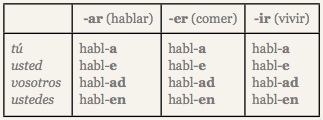
There are 2 ways to give instructions in Spanish: Imperative affirmative Impersonal “se” Imperative Affirmative in Spanish The imperative is used to give orders, instructions, requests… The imperative has only 4 forms: tú, usted, vosotros, ustedes. Regular Remember that when the imperative is accompanied with pronouns, the pronouns are attached to the […]

https://www.youtube.com/watch?v=7Y-9mwszqEM This is a common question between the Spanish students and a great source of confusion so in this article you will learn to differentiate the two pair of terms and use them correctly. The simple answer is that one is an adjective and the other is an adverb, but […]

https://youtu.be/0ELITns6n2o There are four past tenses in Spanish; the perfecto, the indefinido, the imperfecto and the pluscuamperfecto. These four tenses dance together when we tell stories about the past or anecdotes… The four are necessary to express when the action happens, but also to set up the context of that past story. In this blogpost, I […]

A few days ago, a follower of my Facebook page asked me for help with his personal nightmare in Spanish. For him, the irregular verbs in the Pretérito Indefinido (Past Tense) were just something he couldn’t understand, so he wrote me a few lines asking me for some tips. As this week, […]
The Imperfect – Pretérito Imperfecto – is used to talk about the past in Spanish. In the majority of situations, when we use the imperfecto is not to give the main information but to give the context that surrounds the main information. El pasado fin de semana estuve tomando el sol en […]
Describe images in Spanish with presence: language, emotion, and expressive awareness Describing images in Spanish is often taught as a technical skill—for exams, language practice, or everyday communication. Yet when approached with intention, this practice can become something deeper: a tool for presence, emotional awareness, and expressive connection through language. […]